
General

The Urgency of Advocacy

A young teenager started screaming in pain. It came out of nowhere. She drew in breaths with much difficulty and her breathing became harder. She began to have all-round body pain which was inexplicable, at first. This got her extremely dizzy and really weak. Then came a tinge a jaundice in her previously bright eyes. The condition was reoccurring. Her family had sought medical advice but not everyone can afford a doctor every time for a condition that seems to come and go at will. Plus it gets costly. So out of love, and a desperate need to help her ailing child, a mother sought help from a self-proclaimed “prayer warrior” who advised that the child be bathed with ‘holy water’ at the church camp where the kid was to stay for two weeks. During another painful episode, the child got bathed in the middle of the night, with cold water, made pure and ‘holy’. What happened next? Did the child get better? Stay anywhere in Africa for a while with your eyes and ears wide open and you would know that the above story is probably true somewhere at some point in time. I totally fabricated this one though because I imagined a sickle-celled individual, in a painful crisis, being bath with cold water, in a scenario like that. Do you know what happens when someone in that condition gets cold water poured all over him or her? I didn’t know before. I know now. Do you? Why should you even know? Because a child with sickle cell would likely die in that scenario and this is true. Doctors might inform on a condition yet those around the afflicted, those that care but aren’t well-informed, those that don’t know you but affect the situation indirectly, how do they help? How do you get them to help, to care. The answer: ADVOCACY. It is the simple, public, well-intended support for or recommendation of a cause or an action. You get to choose your pick. We’ll still stick to the facts. This remains an opinion piece. What really IS Advocacy? Remember the Ice-Bucket Challenge? Almost everybody heard of it. Most people partook in it. It raised a lot of money and awareness for the cause. The thing is I doubt a huge portion of those that dropped iced cold water on themselves understood why and what they were doing. It got very trendy very fast and I liked that it did. Because it worked for the cause. When Bill Gates does something in the public eye, the International Federation of Dorks, an organisation I believe totally exists, will follow suit. When Kylie Jenner does same, massive mimicry amongst influencers ensues. And it goes on. That is how the Ice Bucket Challenge became so widely popular. It is actually the ALS Ice Bucket Challenge, intended to bring attention to Lou Gehrig’s disease, known as Amyotrophic Lateral Sclerosis (ALS). This exercise raised over $155 million. Think of all the good that money did, or could do. That public support for the ALS cause, that is advocacy. Advocacy, in your own way, is saying “hey, I myself want to know more about this plight, then I want you to know more about it too, then I want you and I to do something about it together to make it better”. And actually taking a step to do all three. Why is Advocacy important? Think voting. Think of how powerful your ONE thumb can be when it joins forces with millions of others with similar intentions. That’s why advocacy is important. We all want something different about the world we live in, something a little bit better. Big corporations and governments have powerful effects on real-life situations but so is the public when we join forces. There is nothing more urgent than people uniting with one voice. Advocacy can change things faster than waiting on the powers that be to effect that change. Get a voice on an issue that’s important to you. Defend and safeguard the rights of the afflicted in that instance. Have their wishes materially considered in your decision making. And you can become an instrument of real change. The NGO Problem. In the UK, I know for a fact that at the very least, misappropriation of funds or failure to follow proper financial procedures and filings would lead to an immediate investigation of an NGO, with the findings published publicly for all to see. Running and managing an NGO is not easy. However, it is widely acknowledged that we have an accountability problem with NGOS here in Ghana, generally speaking. This is not to discredit the good and hardworking people fighting for the poor and the needy. I’m simply saying that easily measurable performance indicators and education on impact guidelines would significantly improve the situation. My aim is not to be unnecessarily verbose, as some problems do not need to be overstated. I believe solutions should be explored more until some are effective. I have just shared my two cents on the matter. I will express it again in much clearer words, to whom it may concern: HELP the NGO’s over here by EDUCATING them on WHAT TO DO to have a bigger IMPACT the RIGHT WAY, since many (and I) can claim massive ignorance on subject matters we genuinely care about. Then investigate and take appropriate action on those that fail to follow set guidelines, both existing and forthcoming. So, what prompted this Advocacy thing? The story goes (a real story this time) that the forever gracious Nancy Nwadire reached out one day a long while back, and we had one of those creatively fulfilling conversations that make you go “ok, that was nice.” She’s really fantastic, you know, founder of the leading luxury fashion brand ICONIC INVANITY. She put me in touch with another gift to Africa, and I felt inspired. A few of my close friends have sickle-cell anaemia. So I have, at one point or many

The Urgency of Advocacy Read More »
Ghana’s Struggle with Depreciation and Growth in the Solow Model

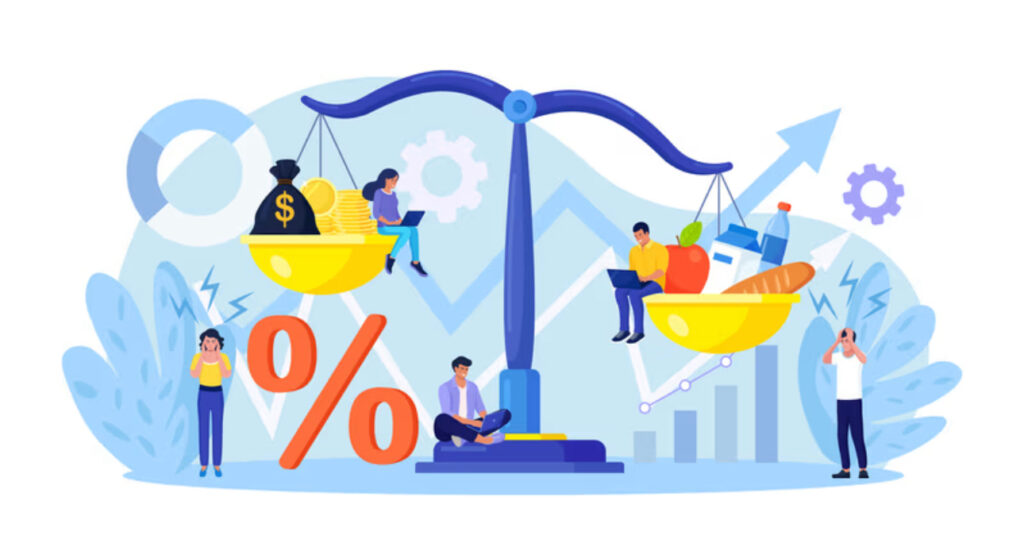
Ghanaians see the evidence of economic wear-and-tear every day. Potholes often appear soon after a road project is commissioned. Power plants operate below capacity within a decade. Irrigation projects are abandoned after only a few seasons. They are signs of an economy where capital depreciates quickly, slowing the path to long-term growth.  Economists have long studied this problem through the Solow growth model, a framework that explains how capital, labour, population growth, and technology interact to shape economic outcomes. I’ll try to explain the Solow model in accessible terms and explore what it means for Ghana. We will examine how depreciation, capital and labour shares, population growth, and technology influence growth trajectories. Although the model can seem abstract, its lessons are highly practical: Ghana’s future prosperity depends not only on building more but also on ensuring what we build lasts, is inclusive, and is complemented by productivity gains. The Solow Model in Plain Language The Solow model, developed in the 1950s by Robert Solow, remains a fundamental part of growth economics. It explains how output in an economy is produced using capital (machines, infrastructure, buildings), labour (workers), and technology (the know-how that makes both productivity). A key idea is the concept of the steady state, which is a point where investment in new capital is just enough to replace the capital that depreciates each year. In simple terms, think of a farmer with a set of tools. Each season, the farmer can save some harvest to buy or repair tools. But tools also rust and break down. If the farmer saves enough, they can maintain or expand their toolkit and produce more in the future. If not, output stagnates or even declines. Ghana’s economy operates on the same principle. The Solow model helps us see three critical dynamics: With this framework, we can examine Ghana’s growth challenges. Depreciation and Ghana’s Infrastructure Challenge Depreciation is arguably the most visible issue in Ghana’s economy. In the Solow model, a higher δ (depreciation rate) raises the break-even line. This indicates that more of today’s investment is used solely to replace worn-out capital, leaving less room for expanding capital per worker. Consequently, the steady-state level of output per worker decreases. In Ghana, depreciation is evident everywhere, from roads to transmission losses in the national grid to water and irrigation projects in decline. High depreciation weakens fiscal planning. The government borrows heavily to fund new projects, but without proper maintenance, the growth benefits are short-lived. Instead of reinvesting in capital (machines, buildings, land, financial assets), Ghana finds itself in a cycle of rebuilding. The Solow model warns us that without reducing δ (depreciation rate), our economy risks stagnation. Capital and Labour in the Solow Framework The Solow model also reminds us that growth is not only about how much we produce, but about how the rewards are shared between those who own machines and money (capital) and those who do the work (labour). In simple terms, part of the economic pie goes to investors and part goes to workers. If more goes to capital, investors benefit more; if more goes to labour, wages improve. In Ghana this balance matters. In sectors like mining or oil, much of the profit flows to capital owners, often abroad, while workers see relatively little. In the informal sector, many people work but earn very low and unstable wages. If the share going to labour keeps shrinking, inequality grows, and the wider society feels the strain. The lesson is that Ghana needs growth that improves both capital and labour. Investment in machines and infrastructure should make workers more productive and better paid, not replace them or leave them behind. Population Growth and Ghana’s Demographic Path Population growth enters the Solow model through the break-even investment line: (δ + n)k. A higher population growth rate means more workers, but also more capital dilution. Investment must stretch further to maintain capital per worker. Ghana’s population is growing at around 2% annually. This creates both opportunity and risk: The Solow model demonstrates that when ‘n’ (population growth) falls, steady-state capital per worker increases, meaning each worker has more capital to utilise. In countries with declining populations like Japan, this has led to higher capital intensity but also ageing challenges. For Ghana, the question is whether we can leverage our demographic trend through education, job creation, and urban planning, or if it will surpass the current capital stock. To put it more simply: if 10 workers share 10 tractors, each worker gets one. If 20 workers share the same 10 tractors, each worker gets half. Population growth without corresponding investment risks overwhelming the available tractors, machinery, and infrastructure. Technology and the Missing Piece Even if Ghana saves more, invests better, and manages its population well, long-term growth still depends on technology. Without new ideas and better ways of working, economies only climb to a certain level and then stall. In Ghana, technology is both the weakest point and the greatest opportunity for progress. Mobile money has already transformed how people access banking services. In agriculture, simple tools like weather apps or small machines could increase crop yields. In industry, adopting cleaner energy sources and modern equipment could make factories more efficient. The Solow model’s clear message is that without consistent improvements in productivity, Ghana risks becoming stagnant. Therefore, making technology adoption and innovation a national priority is vital. Policy Lessons for Ghana The Solow model offers Ghana some practical lessons.  First, we must take care of our roads, power plants, and schools so they last, because repeatedly rebuilding them wastes resources. Second, growth should boost workers’ wages along with investors’ returns. Otherwise, inequality will get worse. Third, our young population can be a strength if education and job creation keep up, but a burden if neglected. Fourth, more of our savings should fund our own growth to reduce reliance on external debt. Fifth, technology must go beyond being just a buzzword and be felt in everyday farming, trading, and industry. Sixth, better governance is

Ghana’s Struggle with Depreciation and Growth in the Solow Model Read More »

Why Ghana Catches a Cold When the U.S. Sneezes

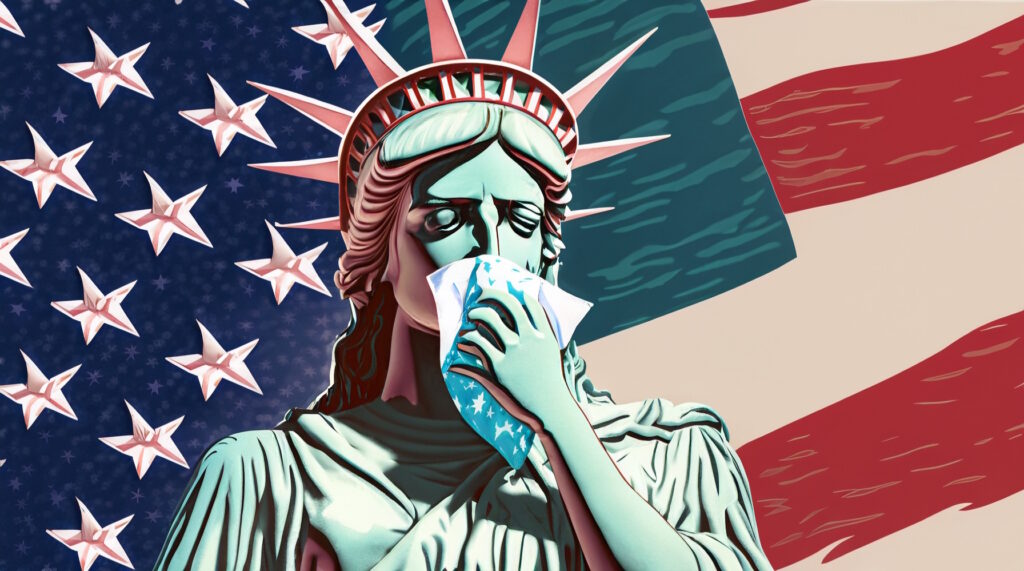
There is a well-known saying in international finance: “When the United States sneezes, the world catches a cold”. For Ghana, this is not just a metaphor. Movements in the U.S. economy influence exchange rates, borrowing costs, export demand, and even the purchasing power of ordinary households in Accra. Understanding the rhythm of the U.S. economy has therefore been more than an academic exercise for me while I study at the University of Missouri. It is a survival strategy for myself, my team, and Maxwell Investments Group. My roles outside MIG also make this relevant to policymakers, businesses, entrepreneurs, and the broader Ghanaian citizenry. This article is my first share of my takeaways from the Macroeconomics Theory classes. We will explore how the U.S. economy performed over the past year, using the key macroeconomic indicators economists rely on to assess growth, inflation, jobs, and trade. More importantly, we will connect those signals to Ghana’s own vulnerabilities and opportunities, showing why U.S. economic shifts are felt directly in our markets. READING THE DASHBOARD: ECONOMIC INDICATORS EXPLAINED Economic indicators are like dashboard lights in a car. They warn us of overheating, display our speed, and hint at what lies ahead. For Ghanaian readers, think of it like this: when traders at Makola Market cut back on stock orders, it acts as a leading indicator. When unemployment figures later rise, that is a lagging indicator. When cocoa export revenues appear in Bank of Ghana reports, that is a coincident indicator. Each type offers a different perspective on the same journey. THE U.S. ECONOMY IN 2024–2025: A YEAR IN REVIEW The past year for the U.S. economy has been a story of resilience after uncertainty. Here is what the data tells us: GDP Growth Real GDP, the broadest measure of output, contracted slightly in early 2025 but rebounded strongly in Q2 with 3.3% growth. The rebound came from resilient consumer spending and a reduction in imports. For Ghana, this matters because strong U.S. demand supports global commodity prices, including cocoa and gold. Domestic Demand (Final Sales) Private final sales measure U.S. household and business expenditure. It increased by 1.9% in Q2, indicating strong domestic confidence. For Ghana, this suggests a continued demand for imported consumer goods, but it also presents a challenge as U.S. spending patterns influence global shipping and supply chains. Incomes (GDI) Gross Domestic Income increased by 4.8% in Q2 2025. Rising wages and profits indicate strong household finances. This indirectly supports remittances sent to countries like Ghana, where U.S.-based diaspora communities are vital sources of household income. Corporate Profits Profits from current production increased by $65.5 billion in Q2 after a sharp decline in Q1. Stronger U.S. profits boost global investment flows, which can spill into African markets via ESG funds and emerging market portfolios. Inflation and Prices The price index for gross domestic purchases increased by just 1.8%. The Federal Reserve’s preferred measure, the PCE price index, remained steady at 2.0%, with core inflation at 2.5%. This stability reassures global investors. For Ghana, where imported inflation is a constant threat, U.S. price stability helps by alleviating global food and fuel cost pressures. Labour Market Unemployment remained between 4.0% and 4.2%. Nonfarm payroll growth slowed in mid-2025 but stayed positive. This indicates a labour market that is cooling, not collapsing. For Ghana, stable U.S. employment supports remittance flows and bolsters dollar strength. Manufacturing PMI, or Manufacturing Purchasing Managers’ Index The PMI increased from below 50, indicating contraction, to 53.3 by August 2025, signalling a manufacturing rebound. For Ghanaian exporters of raw materials and semi-finished goods, rising U.S. factory activity could lead to higher demand. Exchange Rates The U.S. dollar weakened slightly against the euro and the pound, but gained strength against the yen and the yuan. The overall dollar index fell modestly. For Ghana, this is significant. When the dollar weakens, the cedi experiences less pressure. However, when the dollar strengthens, the cost of imports increases, and inflationary effects are felt by consumers. Interest Rates The Federal Reserve kept the Fed Funds rate at 4.25%–4.50%. This cautious approach signals stability, but for Ghana, high U.S. interest rates can increase our borrowing costs and diminish investor appetite for riskier frontier-market debt. WHY THIS MATTERS FOR GHANA Each of these U.S. signals transmits to Ghana in concrete ways: The phrase ‘when the U.S. sneezes, Ghana catches a cold’ highlights this reliance. For an open, arguably import-dependent economy like Ghana, the U.S. economy functions almost like an external central bank whose signals influence our monetary and fiscal systems whether we like it or not. LESSONS FOR GHANAIAN POLICYMAKERS AND BUSINESSES FOR NOW, THE COLD IS INEVITABLE. The U.S. economy’s performance over the past year has demonstrated resilience, maintaining steady growth, moderate inflation, and cautious monetary policy. For Ghana, each of these signals is significant. From the strength of the dollar to the rate of U.S. job creation, America’s economic health is directly connected to Ghana’s stability. The lesson is clear: Ghana cannot afford to ignore U.S. economic signals. Policymakers, businesses, and even households must keep an eye on America’s “dashboard lights,” because when the U.S. sneezes, Ghana really does catch a cold. It is, for the time being, inevitable. Yes, the inspiration for that line is Thanos. I hope you found this article both insightful and enjoyable. Subscribe to the ‘Entrepreneur In You’ newsletter here: https://lnkd.in/d-hgCVPy. I wish you a highly productive and successful week ahead!  ♕ —- ♕ —- ♕ —- ♕ —- ♕ Disclaimer: The views, thoughts, and opinions expressed in this article are solely those of the author, Dr. Maxwell Ampong, and do not necessarily reflect the official policy, position, or beliefs of Maxwell Investments Group or any of its affiliates. Any references to policy or regulation reflect the author’s interpretation and are not intended to represent the formal stance of Maxwell Investments Group. This content is provided for informational purposes only and does not constitute legal, financial, or investment advice. Readers should seek independent advice before making any decisions based on this material. Maxwell Investments Group assumes no responsibility

Why Ghana Catches a Cold When the U.S. Sneezes Read More »