

General

Introductory to Integrated Supply Chain Management

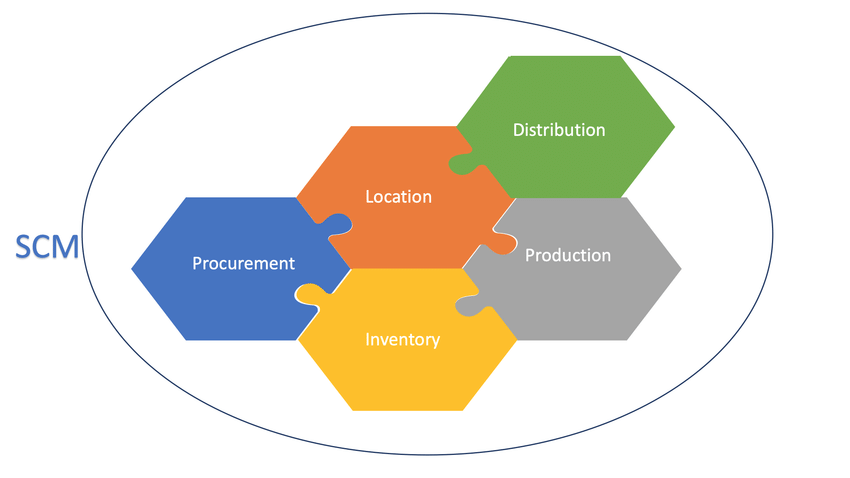
In light of my appointment as Eminent Member and Subject Matter Expert on Innovations & Business Development with the Chartered Institute of Supply Chain Management (CISCM), I am pleased to share with my readers an important contribution from the Institute. Supply chains are often discussed in fragments, procurement here, logistics there. Yet the real power lies in viewing them as integrated systems that sustain businesses, nations, and global trade. In truth, supply chains are present in virtually every commercial activity. The shopkeeper depends on wholesalers and distributors. A barber depends on the makers of clippers, electricity providers, and suppliers of creams and oils. A software company, which seems purely digital, is still tied to a chain of servers, cables, devices, and cloud providers that make their service possible. Every one of these examples illustrates a simple truth: supply chains are everywhere. They underpin how we work, how we trade, and even how we live. This is why the subject matter of supply chain management is everybody’s business. If you think supply chain isn’t your business, you could be missing a key part of the bigger picture. I’ll lastly add that leadership in supply chains matters. Not just at the government or multinational level, but within SMEs, cooperatives, and even start-ups. Leaders set the tone for reliability, transparency, and accountability. The ability of a small cooperative to store grain properly, or of a transport manager to honour delivery commitments, can determine whether an entire chain holds or breaks. Leadership is the hidden driver of supply chain resilience. This is why CISCM’s work resonates so strongly with me. The article that follows, prepared by CISCM, goes deeper into this subject, and I encourage every reader, whether entrepreneur, policymaker, or consumer, to see themselves as part of the supply chain story. Because until we take supply chains seriously, we will continue to underestimate what truly drives prosperity. I trust readers will find this publication as timely and instructive as I did. __________________________________________________________ What is Supply Chain Management? At the most fundamental level, supply chain management (SCM) is management of the flow of goods, data, and finances related to a product or service, from the procurement of raw materials to the delivery of the product at its final destination. Although many people equate the supply chain with procurement or logistics, procurement or logistics is actually just one component of the supply chain. Supply Chain Management traditionally, comprises the following activities; material planning, procurement, inventory and material handling, operations or processing or manufacturing, transportation, logistics, suppliers, wholesalers, retailers, and consumers. Its also Includes information flow and applications of information for all parties involved in product or service creation, order fulfillment, and information tracking. Today’s digitally based Supply Chain Management systems include material handling and software for all parties involved in product or service creation, order fulfillment, and information tracking―such as suppliers, manufacturers and wholesalers. Supply chain activities span procurement, product lifecycle management, supply chain planning (including inventory planning and the maintenance of enterprise assets and production lines), logistics (including transportation and fleet management), and order management. Supply Chain Management can also extend to the activities around global trade, such as the management of global suppliers and multinational production processes. History of Supply Chain Integration Supply chains have existed since ancient times, beginning with the very first product or service created and sold. With the advent of industrialization, SCM has become more sophisticated, allowing companies to do a more efficient job of producing and delivering goods and services. For example, Henry Ford’s standardization of automobile parts was a game-changer that allowed for the mass production of goods to meet the demands of a growing customer base. Over time, incremental changes such as the invention of computers have brought additional levels of sophistication to SCM systems. However, for generations, SCM essentially remained a linear, silo-based function that was managed by supply chain specialists. The internet, technological innovation, and the explosion of the demand-driven global economy has changed all that. Today’s supply chain is no longer a linear entity. Rather, it’s a complex collection of disparate networks that can be accessed 24 hours a day. At the center of these networks are consumers expecting their orders to be fulfilled―when they want them, the way they want them and where they want them. We now live in a time of unprecedented global business and trade, not to mention continual technological innovation and rapidly changing customer taste and preferences and attendant expectations. Today’s best supply chain strategies call for a demand-driven operating model that can successfully bring people, processes, and technology together, around integrated capabilities to deliver goods and services with extraordinary speed and accuracy. Though SCM has always been an enterprise fundamental, the supply chain today is more vital than ever as a marker for business success. Companies that can effectively manage their supply chain to adapt to today’s volatile and ever-changing, technology-driven business environment are the ones that will survive and thrive. What is the conventional meaning of Supply Chain Integration? Supply chain integration can be defined as a close calibration and collaboration within a  supply chain, mostly with the application of shared management information systems. A  supply chain is made from all parties that participate in the completion of acquisition, like  the resources, raw materials, manufacturing of the product, shipping of completed products  and facilitating services. The concept of Conventional Supply Chain Management (SCM) is based on Five (5) core tenets: The Change Theory  The global socio-economic and business ecosystem is being driven by existential challenges of VOLATILITY, UNCERTAINTY, COMPLEXITY, and AMBIGUITY. These phenomena have influenced the tectonic shift from conventional Supply Chain Management, with the corresponding features mentioned above, to Integrated Supply Chain Management which is an enhanced position of Supply Chain Integrations called INTEGRATED SUPPLY CHAIN MANAGEMENT (ISCM).   At the World Economic Forum 2014, it became very clear that the concept of Integrated Supply Chain Management is the new paradigm that will provide sustainable and reliable solutions to the global economic and business challenges which confront many

Introductory to Integrated Supply Chain Management Read More »

What Happens After the Applause Fades Post-Launch?

This article is for the 20-something-year-olds who send me their pitches day in and day out. If I’ve already spoken to you, then you’ve already heard this before. Every industry has its rituals of spectacle. In business, that ritual is the launch. We pour energy into unveiling the minimum viable product, celebrating the award, or cutting the ribbon on a new office. Photographers capture the moment. Speeches are given. Sometimes there’s champagne. But beneath the confetti lies an uncomfortable truth: launches are the easy part. The harder, slower, quieter work begins after the applause fades. I have sat in offices where executives obsessed over the launch date as if it were destiny, and in village markets where farmers marked “first sales” with dancing and drums. Both moments mattered, but both were only beginnings. If we are serious about innovation, growth, and long-term transformation, we need to move our gaze from the spectacle of starting to the discipline of sustaining.  That is the heart of post-launch: resilience. The Seduction of the Launch There’s something psychologically irresistible about launches. Humans are wired to love novelty. Neuroscientists have shown that the dopamine reward system in our brains spikes when we encounter something new, whether it’s a shiny phone, a bold idea, or even just a fresh headline. Media outlets know this. Investors too. Politicians cut ribbons not because concrete drying is newsworthy, but because audiences thrill at beginnings. This is why, across the globe, we celebrate MVPs (minimum viable products) as if they are fully fledged companies. It is why African tech hubs routinely generate more media for demo days than for five-year sustainability reports. And it is why entrepreneurs sometimes fall prey to the “founder hero” narrative, where the drama of ignition is treated as the whole story. It is not. But novelty is not the same as resilience. A launch without a maintenance plan is a short-lived firework: spectacular, yes, but fading into darkness just as quickly. The Mirage of the Launch History is littered with launches that dazzled and died. Consider Theranos in the United States. Its promise to revolutionise blood testing was celebrated with billion-dollar valuations and magazine covers. But beneath the surface, the post-launch discipline of peer review, maintenance of credibility, and incremental improvements was absent. What collapsed was not only a company but the trust itself. Closer to home, Africa has seen its share of high-profile launches that stumbled. Some governments have launched industrial parks with ribbon cuttings, only for machinery to rust months later because spare parts were never budgeted. Some start-ups dazzled investors with apps that attracted early downloads but failed to update their servers or adapt to user feedback. The “launch mirage” creates the illusion of progress, but without systems of learning and adjustment, it is simply that: an illusion. The financial world provides the starkest reminder. The 2008 crisis was triggered by instruments whose launches were celebrated on Wall Street as “innovations.” What followed was not resilience but collapse because the systems sustaining them were never stress-tested. Feedback Loops are Oxygen Resilience, by contrast, is sustained by feedback. In farming, you know that crops respond to rainfall differently each season. Farmers in Ghana’s northern regions adjust planting times not once, but continuously, as they observe weather changes. This is a feedback loop: observe, adapt, survive. In business, feedback loops serve the same purpose. Amazon’s entire empire rests not just on its launch as an online bookstore, but on its obsessive iteration. It tests relentlessly, gathering user data, refining logistics, tweaking algorithms. This is invisible to the public but vital to its survival. At Maxwell Investments Group, our networks of farmers thrive not because we launched contracts once, but because we maintain trust through constant recalibration: pricing updates, transparent communication, and swift adjustments when supply chains falter. Post-launch resilience is not a product but it’s a living conversation between system and environment. The Fragility of Forgetfulness Another enemy of resilience is forgetfulness. Institutional memory is often the first casualty of obsession with novelty. Africa offers sobering examples. Colonial governments built railways that spurred trade. But after independence, maintenance was neglected. Today, many of those tracks lie in disrepair, symbols not of progress but of the cost of forgetting. In corporate settings, the same pattern repeats. Leadership turnover wipes out lessons learned. Staff rotate, reports gather dust, and every new executive wants to “reinvent” the organisation. The absence of structured memory forces companies to repeat mistakes. At Maxwell Investments Group, we deliberately invest in documenting processes, creating playbooks, and cross-training teams. This is not glamorous work, and it rarely earns headlines. But it prevents fragility. It keeps wisdom alive even when people move on. The Resilience Dividend Why should anyone care about the slow grind of maintenance and feedback? Because resilience pays dividends that launches never can. Investors often look for signals of durability. A start-up that survives its first storm attracts more serious capital than one that dazzles at demo day. In fact, resilience itself becomes a form of collateral: proof that an enterprise will not collapse at the first sign of market turbulence. Consider Ghana’s cocoa sector. International buyers favour suppliers who can consistently deliver quality beans year after year, not just one harvest. That consistency commands premiums. The same is true in manufacturing, where the reliability of supply chains attracts global partners. The resilience dividend is both financial and reputational. Organisations known for post-launch stamina earn trust, and trust multiplies opportunity. Why We Celebrate Launches, Not Longevity And yet, despite this evidence, our culture continues to reward launches more than longevity. Why? Partly, it is novelty bias. Humans overvalue the new and undervalue the old. Media houses too are incentivised to cover fresh stories rather than long maintenance journeys. And capital markets often pressure leaders to show short-term wins rather than long-term stability. Even in awards ceremonies, categories for “Best Innovation” or “Most Promising Start-up” are far more common than categories celebrating a decade of quiet excellence. We lionise beginnings, not endurance. The

What Happens After the Applause Fades Post-Launch? Read More »

Dr Maxwell Ampong

The “Lone Genius” is a Myth because Innovation Is a Team Sport

We’ve been repeatedly sold a seductive lie for a long time. Perhaps because we are drawn to stories that are clean, simple, and dramatic. Imagine: the lone inventor in a dimly lit workshop. Imagine: the tech founder in a dusty garage who conquers Silicon Valley. Picture this: the artist who wakes from a dream and pours a masterpiece onto the canvas before dawn breaks. These stories are cinematic, and they are inspiring, and they are also, more often than not, plain misleading. Behind every celebrated “genius,” there is an entire web of support, often invisible to the outside world. There are mentors offering guidance, rivals pushing the bar higher, critics sharpening the ideas, funders taking the early risks, and family members quietly managing life’s practicalities. The Wright brothers’ triumph in flight was as much about the machinists in their shop as it was about their vision. Einstein’s breakthroughs in physics were shaped through conversations with friends and fellow thinkers. Even the mystic poet Rumi was deeply influenced by the companionship and insight of Shams of Tabriz. The myth survives because it’s neat. It gives us a singular hero to admire, a figure to model ourselves after. It tells us that brilliance is self-contained, and that we too could ascend to greatness in splendid isolation. But the truth, though more complex, is far richer because it tells a story of interdependence, shared effort, collaboration and the true cradle of innovation. Why the Myth Persists Part of the blame lies with how we tell stories. Media headlines demand simplicity. “Visionary changes the world” is far easier to write than “Team of thirty-seven across three continents incrementally refines a decades-old process!” Complexity doesn’t lead to quick, clickable stories on the internet. Our education systems also bear responsibility. From a young age, we are conditioned to compete as individuals, receiving separate grades, rewarded for solitary achievements, and seldom encouraged to develop the subtle skills of collaboration, negotiation, and shared credit. In business, we reinforce this bias by naming awards after founders, rather than recognising the diverse teams that turn visions into reality. Ego is another factor. The lone-genius myth flatters our ambitions. It’s appealing to imagine ourselves as the architect of our own solitary legend, rather than as a node in a network of contributors. But those who have achieved meaningful, lasting impact know the truth: it is often the overlooked skill of making others better that defines transformative leadership. The MIG View: Ecosystem Over Ego At Maxwell Investments Group (MIG), I witness the power of interconnectedness every day. Our traders are more astute because our data analysts identify subtle patterns. Our field officers make improved decisions because insurance partners highlight risks that may not be obvious on the ground. One company’s success is always linked to another’s contribution. Maxwell Logistics guarantees that harvests reach Tema on time. Confideo Technologies provides the tools to monitor and interpret risk. Prime WellMax leverages its negotiating power to secure the right deals at the optimal moment. These moving parts form a dynamic ecosystem where innovation thrives through ongoing dialogue, not in isolation. This is why our growth strategy focuses as much on people as on projects. We bring in bright young minds eager to challenge the status quo, and pair them with experienced experts who possess the hard-earned wisdom of their careers. It’s the meeting of perspectives that strengthens the system. Innovation is rarely a singular act. The “solo” might be the big reveal of, say, a groundbreaking product or service like this WellMax Insurance Inclusive product. But the “groove” is the invisible fabric of our shared understanding, mutual trust, and the ability to anticipate each other’s moves without instruction. At MIG, I’ve seen this groove at work when teams hand off projects seamlessly, each knowing when to lead and when to support. It’s in these moments that real breakthroughs happen. The Head-Scratcher We Don’t Ask Enough Here’s a question: if your best performer left tomorrow, would your organisation still run smoothly? In sports, no team expects to win a championship relying solely on one striker. Coaches build depth, rotate players, and train substitutes to step in without missing a beat. Yet in business, we often overlook this principle. We are unprepared when the exit of one person causes a project or an entire department to falter. A genuinely innovative system is designed for adaptability, ensuring that no single departure destabilises the whole. I place more on developing “capacity resilience,” the organisation’s ability to absorb shocks and continue progressing. Leadership as Capacity Unlocking Leadership is not about being the most brilliant person in the room. It is about creating conditions where others can shine. Sometimes it means staying quiet so a new voice can be heard. Sometimes it means giving away credit so that someone else can gain the confidence to lead. And sometimes it means admitting “I don’t know” so that the best ideas can emerge from anywhere. I was away for a couple of months last year, and I have previously stated in speeches and articles that the team operated much better than I expected. They surpassed what I had even planned to do if I had been present. Still not sure how to feel about that haha! The freedom to think collectively and make decisions together yielded results far beyond what top-down instructions could have achieved. True leadership multiplies innovation by unlocking the potential of the collective. The Invisible Work That Makes Innovation Possible There is a type of work that doesn’t make headlines but forms the foundation of all visible success. The late-night calls to resolve misunderstandings between partners. The carefully maintained spreadsheets that prevent costly mistakes. The emotional labour involved in building trust across diverse teams. These contributions rarely show up in awards or press releases, but without them, the “genius” moments would never materialise. Recognising, valuing, and rewarding this invisible work is essential if we want innovation to be consistent rather than accidental. Learning to Innovate Across Boundaries Some of the best ideas emerge when disciplines

The “Lone Genius” is a Myth because Innovation Is a Team Sport Read More »