

Author name: Dr Maxwell Ampong

Difference between “Risky” and “Difficult”.

Earlier this week, during a meeting, a colleague looked across the table and said something interesting. “This is bold,” he remarked. “You like risk.” What made the observation curious was that this was the same person, among the same team, who had previously praised me for being exceptionally risk-averse. Nothing about my temperament had changed. Nothing about my decision-making framework had changed. Yet the moment I revealed the full scale of a plan we had been quietly building towards for almost a decade, the assessment shifted. Suddenly, I was a risk-taker. So I pushed back. I explained that timing mattered. The macroeconomic climate mattered. The financial model had been stress-tested. The assumptions had been interrogated. The pathway to execution was difficult, certainly, but visible. Every major question had been accounted for. The uncertainty had not disappeared, but it had been measured. “This isn’t risky,” I said. “It’s hard, but not risky.” He listened thoughtfully. Then he called it risky again. I explained again. After nodding while I was speaking, he repeated himself a third time. “Still risky!” At that point, I stopped arguing. Not because I agreed, but because I have developed a habit that functions almost like an internal antivirus system. Whenever someone repeatedly describes me in a way that conflicts with my self-perception, I pause and investigate. Perhaps they see something I do not. Perhaps there is a blind spot. Perhaps there is a bug in the operating system that requires attention before it spreads into larger decisions. So I sat with the question for a few days. Am I becoming less risk-averse?  The answer, I believe, is no. In fact, I suspect the opposite is true. The confusion arises because we often mistake scale for risk. A large ambition looks risky from the outside. A significant investment looks risky. A bold strategic move looks risky. But size and risk are not synonymous. Many of the most dangerous decisions in business are small, familiar and comfortable. They attract little scrutiny precisely because they look ordinary. Equally, some of the safest decisions are those that appear dramatic but have been rigorously analysed beneath the surface. What people frequently label as risk is often simply difficulty. The distinction matters. Risk is uncertainty without understanding. Difficulty is understanding exactly what must be done and recognising that it will require effort, discipline and resilience. A mountain is difficult. A cliff edge is risky. The difference is that a mountain rewards preparation. The better your training, equipment, planning and execution, the greater your odds of reaching the top. A cliff edge offers no such bargain. The margin for error is so small that even excellence cannot fully protect you from catastrophe. Difficulty is often reduced by effort. Risk is defined by uncertainty and consequence. My plan is a mountain, not a cliff edge. It is demanding, but the variables are largely knowable. Success is not guaranteed, but neither is it dependent on luck. The challenge is execution, not survival. We need to put in the work in a timely and diligent manner. This is a distinction many leaders fail to make. We often admire people who undertake difficult things as though they are inherently courageous. In that case, call me chicken, because as much as I like to work hard, I am a coward when confronted with uncertainty. I don’t like not knowing what I don’t know when it comes to my business. What you guys call bold when you look at me is the result of preparation, calculation, acceptance of the assignment, knowing exactly what the assignment is and executing it over decades.  In reality, some of the boldest-looking decisions are simply the result of careful preparation. Conversely, some of the most reckless decisions appear conservative because they involve doing what has always been done. Familiarity can disguise risk just as effectively as scale can exaggerate it. This distinction has become increasingly relevant in Ghana’s current economic environment. The past few years have tested businesses, investors and households alike. Inflationary pressures, currency volatility and shifting consumer behaviour have forced leaders to abandon assumptions that once felt reliable. Planning horizons have shortened. Cash flow has become a strategic concern rather than an accounting metric. Decisions that once seemed straightforward now require layers of analysis. In such conditions, caution can easily become paralysis. Many organisations mistake inactivity for prudence. Yet, refusing to move is itself a decision. Waiting indefinitely carries costs. The time value of money does not pause because executives feel uncomfortable. Opportunities decay. Competitive advantages erode. Markets evolve. I am saying I am always on the move. I once had my team wait three years before acting on something they claimed everything was satisfactory with. The challenge is not to eliminate uncertainty entirely. It is to determine whether uncertainty has been sufficiently understood to justify action. Perhaps this perspective is easier to appreciate in Ghana than elsewhere. Ours is a country where uncertainty is impossible to ignore. Business leaders have become students of volatility. Entrepreneurs have learned to build despite imperfect conditions. Households have become experts in adaptation. Yet Ghana also offers countless examples of people succeeding under circumstances that, on paper, appear unfavourable.  Consider the market woman who understands her customers better than any spreadsheet. The entrepreneur who expands only when cash flow allows, building from realised income rather than projected growth. The trader in Walewale who detects shifts in demand before formal indicators register them. Or the farmer who recognises changes in a season before economists recognise changes in a market. None of these people operate recklessly. Their confidence is rooted in observation, repetition and accumulated experience. What appears risky to an outsider often reflects a depth of understanding that the outsider simply cannot see.  Viewed from a distance, their decisions can look courageous. Viewed up close, they often look obvious. Their success is not the absence of difficulty. It is evidence of alignment. They are operating in environments that reward their strengths. This is how I spent my

Difference between “Risky” and “Difficult”. Read More »

Understanding Ghana’s Reference Rate (GRR).

When the Bank of Ghana (BoG) talks about reforming the Ghana Reference Rate (GRR) or targeting lending rates closer to, or lower than, 10%, many people assume the GRR is simply the same thing as the Bank of Ghana’s policy rate. It is not. The GRR sits at the centre of one of the most important reforms in Ghana’s financial system over the past decade. To understand why it matters, you first have to understand the problem Ghana was trying to solve before 2018. Before the GRR, how lending rates worked in Ghana. Before April 2018, commercial banks in Ghana used what were called “base rates” or “prime rates” to price loans. Every bank developed its own formula internally. That meant one bank could use inflation heavily. Another could emphasise its operating costs. Another could factor in shareholder return expectations. And another could include large risk cushions. The result was enormous inconsistency across the banking sector. Two borrowers with similar profiles could walk into two different banks and receive dramatically different interest rates. According to industry discussions at the time, some banks quoted base rates around 17%, while others quoted 25–26% under similar economic conditions.   This created several major problems: 1. Lack of transparency. Borrowers often did not know why rates were high, why rates differed between banks, or how banks calculated their loan prices. Banks essentially became “black boxes” when it came to lending. 2. Monetary policy was not working efficiently. The Bank of Ghana could reduce its policy rate, but commercial banks might refuse to reduce lending rates accordingly. This weakened what economists call monetary policy transmission, the process through which central bank decisions affect the real economy. It means, in practice, BoG would lower rates to stimulate businesses, but banks might keep lending rates elevated, meaning businesses and households never actually feel the relief. This became a major concern for policymakers.  3. High lending costs hurt businesses. For years, Ghana has struggled with some of the highest commercial lending rates in Africa. SMEs (small and medium enterprises) were especially affected because banks considered them risky. High borrowing costs discouraged expansion, hiring, industrial investment, and long-term planning. Many businesses survived using short-term expensive credit instead of productive long-term financing. Bank of Ghana’s earlier attempt before GRR. Interestingly, the GRR was not the first attempt to fix the problem. In 2012, Bank of Ghana introduced guidelines for computing base rates. These guidelines were revised again in 2013.   The goal was to standardise how banks priced loans. But the reforms failed to fully solve the problem because banks still had too much flexibility, methodologies remained inconsistent, and customers still struggled to compare rates fairly. By 2017–2018, BoG concluded that the entire system needed a redesign. The Birth of the Ghana Reference Rate (GRR). In 2018, the Bank of Ghana, working together with the Ghana Association of Banks (GAB), introduced the Ghana Reference Rate (GRR).   The first official GRR was announced in April 2018 at 16.82%.   The reform fundamentally changed how lending rates were supposed to work. Instead of every bank inventing its own benchmark, there would now be a single common benchmark rate for the entire industry, published monthly and visible to everyone. Banks would then add a risk premium depending on the borrower. The formula became: Loan Rate = GRR + Risk Premium This was a major structural shift in Ghana’s banking system. So what exactly is the GRR? The GRR is a benchmark lending rate. It is the common foundation commercial banks use when pricing loans. It is not the actual final lending rate. Rather, it acts as the starting point. If the GRR is 20% and a bank may add a 3% risk premium, plus other costs, then the customer may borrow at 23% or more. Is the GRR the same as the Policy Rate? No. This is one of the biggest misconceptions. 1. The Monetary Policy Rate (MPR) The policy rate (or Monetary Policy Rate, MPR) is the rate set by the Bank of Ghana’s Monetary Policy Committee. It is the central bank’s main signalling tool for controlling inflation, money supply, and economic activity.   When inflation rises sharply, BoG may increase the policy rate to make borrowing more expensive. When economic growth slows, BoG may reduce it to encourage lending and spending. The MPR is essentially the “signal” rate of the economy. 2. The Ghana Reference Rate (GRR) The GRR, on the other hand, is a lending benchmark for commercial banks. It incorporates several market indicators and is intended to guide loan pricing. The GRR is influenced by Treasury bill rates, inflation, interbank lending rates, and the BoG policy rate itself.   So the policy rate influences the GRR, but the GRR is not the policy rate. Think of it this way: Rate Purpose Policy Rate (MPR) Central bank signal for monetary policy GRR Benchmark commercial banks use to price loans 
Why was the GRR significant? The GRR was significant for reasons beyond just banking. It represented an attempt to modernise Ghana’s financial architecture. 1. It improved transparency. For the first time, customers could see a common benchmark, compare spreads between banks, and better understand how loans were priced. This reduced some of the opacity that had characterised lending markets. 2. It increased accountability. Under the new framework, banks had to justify the extra margin they added above the GRR. That was important because it exposed risk pricing, inefficiencies, and potentially excessive spreads. In theory, competition should have pressured banks to lower margins. 3. It strengthened monetary policy transmission One of BoG’s biggest frustrations had been that policy-rate cuts were not reaching ordinary borrowers. The GRR was designed to improve the “transmission mechanism.” If market indicators fell, the GRR should fall, and lending rates should eventually follow. At least, that was the theory. GRR was also about Trust. One overlooked dimension of the GRR reform is that it was partly about rebuilding trust after Ghana’s banking sector crisis. Between 2017 and 2019, Ghana experienced a major banking cleanup.

Understanding Ghana’s Reference Rate (GRR). Read More »

The Thin Line Between Diplomacy and Duplicity, Tact and Hypocrisy.

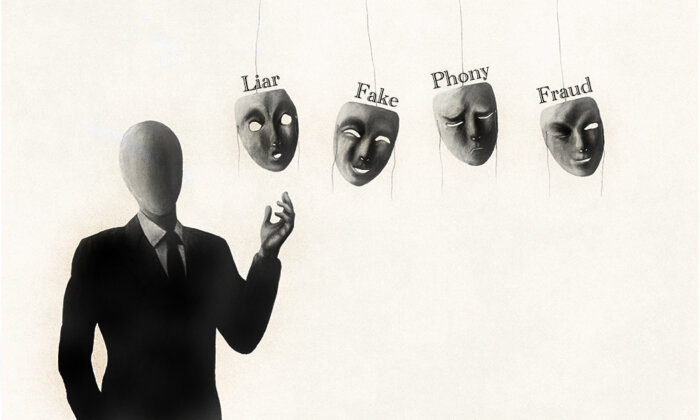
All leadership is performance. The question is whether the performance serves truth or conceals it. That distinction is the thin, trembling line between diplomacy and duplicity. In every boardroom, cabinet meeting, investor call, and family business succession plan, people are constantly editing reality before presenting it to others. No executive says everything they think. No politician reveals every calculation. No founder narrates every fear to employees. Civilisation itself depends on some level of restraint. Brutal honesty is often less moral than disciplined tact. Yet somewhere between restraint and deception, a moral mutation occurs. Diplomacy becomes theatre. Tact becomes camouflage. The language of prudence becomes the language of evasion. This modern crisis is not merely that people lie. Human beings have always lied. The deeper crisis is that institutions increasingly reward those who can imitate sincerity while remaining detached from truth altogether. We have entered an era where perception often outperforms principle, at least temporarily. That is why the line between diplomacy and duplicity matters more than ever. THE PHILOSOPHY OF TRUTH AS A VECTOR, NOT A POINT. Diplomacy is not the absence of truth. It is the vectoring of truth. It is applying the force of truth in a specific direction and at a specific speed to move a relationship or outcome without shattering it. It assumes truth has mass and momentum. Drop it from the wrong height and it craters the room. A competent diplomat understands timing, sequencing, and human psychology. They know that truth delivered without wisdom can become destruction masquerading as honesty. There are truths that must be prepared for before they can be received. Consider a restructuring CEO walking into a struggling company. The undiplomatic leader announces on day one that, “Half this organisation is inefficient, and layoffs are inevitable!” The statement may be factually accurate, but accuracy alone does not make communication ethical. Panic spreads. Productivity collapses. Talent exits early. The truth becomes economically corrosive because it was delivered without strategic care. The diplomatic leader communicates differently. He might say, “The company faces hard realities. We will evaluate every function carefully, preserve critical talent, and communicate transparently as decisions are made.” The underlying reality has not changed. What changes is the pacing of revelation and the preservation of institutional stability. Duplicity, however, is something entirely different. Duplicity is a formal noun that refers to deceitfulness, double-dealing, or the act of intentionally misleading others by hiding one’s true intentions. It involves presenting one version of yourself to the world while acting or thinking the opposite in private. Duplicity is the simulation of truth. It preserves the aesthetics of honesty while evacuating its ethics. The philosopher Harry Frankfurt called this “bullshit”, speech unconcerned with truth or falsity, concerned only with effect. True diplomacy cares about both effect and truth. Duplicity only cares about effect. Hypocrisy is duplicity’s mature form, the institutionalisation of that simulation. The mask fuses to the face. This is why hypocrisy is often more dangerous than open corruption. Openly corrupt people at least provide informational clarity. Hypocrites distort the moral map itself. They weaponise the language of virtue while privately pursuing vice. They do more than merely violate trust because they counterfeit it. And because modern systems increasingly reward optics, hypocrisy can scale faster than honesty. THREE AXES OF JUDGMENT. Most people misdiagnose themselves because they evaluate behaviour emotionally instead of structurally. To locate yourself on the spectrum between diplomacy and duplicity, test your conduct against three axes. 1. Temporal Integrity, the Access Test Question: Does this delay truth, or deny it? Diplomacy says, “Now is not the moment, but there will be a moment.”Duplicity says, “Now is not the moment,” while privately ensuring that moment never arrives. The distinction matters. In negotiations, timing can preserve relationships. During a sensitive acquisition, a CEO may temporarily withhold information until financing closes to avoid destabilising markets or employees. That can be responsible stewardship. But delay becomes deception when time is used not to prepare the truth, but to bury it. Consider a mining CEO telling a host community, “We’re reviewing environmental concerns,” even though the board has already approved expansion without a mitigation plan. That is not tact. That is a stall tactic designed to exhaust resistance while preserving corporate momentum. A diplomatic version would sound very different. “We intend to expand operations. The decision to grow is made. What remains unresolved are three environmental concerns we must solve together before implementation.” Notice the difference? One statement preserves agency. The other manipulates uncertainty. Temporal integrity asks whether truth is postponed in the service of alignment or postponed in the service of advantage. Many scandals begin not with a lie, but with an indefinite postponement of honesty. 2. Ontological Integrity, the Alignment Test Question: Can my public self and private self be introduced without a scandal? This may be the most brutal test of all. Diplomacy allows for role separation. You can be tougher in negotiations than at dinner. You can shield internal debate from public scrutiny. Organisations require compartments. But duplicity requires value separation. Your public principles and private actions become epistemic enemies. A fintech founder signs an “Ethical AI Pledge” at a global summit. Cameras flash. LinkedIn applauds. Investors praise the company’s “responsible innovation framework. Months later, leaked Slack messages reveal internal instructions to “scrape first, ask forgiveness later” to beat competitors to market. The public pledge was not diplomacy. It was masquerading in a costume. Markets now have a name for this phenomenon: ethics washing. ESG washing. Purpose washing. Diversity washing. Every era creates new vocabularies for old hypocrisy. And eventually, the correction arrives. When institutions discover that virtue signalling concealed operational vice, reputational collapse accelerates faster than traditional financial crises because betrayal compounds outrage. Investors can forgive failure. They struggle to forgive fraudulence disguised as morality. The greater danger is psychological. Repeated duplicity fragments identity. Leaders begin performing versions of themselves so often that they lose contact with the original self underneath. The role consumes the person. At that point, hypocrisy stops

The Thin Line Between Diplomacy and Duplicity, Tact and Hypocrisy. Read More »